Research & Innovation
AI is transforming healthcare by identifying illnesses, tailoring treatments, and posing significant queries on patient care in the future.
Overview
A wide range of computational methods, including machine learning and natural language processing, are included in artificial intelligence and are already starting to find their way into every aspect of medicine.
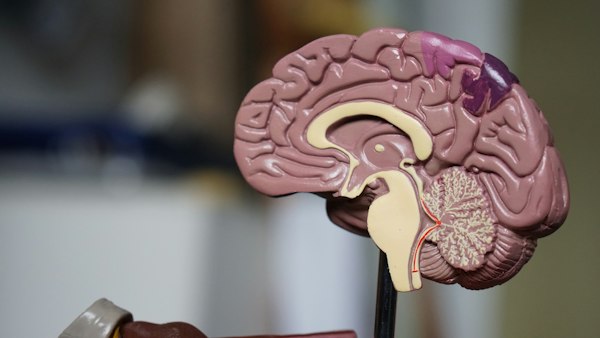
Physicians increasingly rely on AI-assisted imaging platforms to support diagnostic decisions.
Artificial intelligence (AI) is a group of technologies rather than a single one. These tools include deep learning neural networks that can read medical images with remarkable accuracy, natural language processing systems that can parse clinical notes and extract valuable insights from unstructured text, and conventional machine learning algorithms that find patterns in patient data.
AI's influence on medicine is expanding quickly. When it comes to identifying malignant tumors in imaging scans, helping researchers organize clinical trials, identifying patients who are at risk of deterioration, and automating large amounts of administrative work that currently takes up doctors' time, algorithms are already outperforming radiologists. The implementation obstacles that separate today's pilots from tomorrow's standard of care are just as significant as the promise.
"There are already a number of research studies suggesting that AI can perform as well as or better than humans at key healthcare tasks, such as diagnosing disease. Today, algorithms are already outperforming radiologists at spotting malignant tumours."
— Davenport & Kalakota, Future Healthcare Journal (2019)Machine learning, a statistical method in which models are trained on massive datasets and progressively improve their performance, is now the most prevalent type of AI in the healthcare industry. According to a seminal 2018 Deloitte poll, 63% of US businesses that now use AI have integrated machine learning into their operations. This most frequently manifests in clinical settings as precision medicine, which forecasts which therapies are most likely to be successful based on a patient's particular profile. One of the biggest paradigm shifts in the history of the field is the move from population-level medicine to customized treatment.
Key Application Areas
From the lab bench to the bedside and the billing department, AI technologies are being used in every aspect of healthcare delivery.
The accuracy with which deep learning models evaluate X-rays, MRIs, and CT scans is comparable to, and often even higher than, that of board-certified radiologists. One of the most developed and clinically proven uses of AI in medicine today is AI-assisted radiography.
Based on a patient's genetic, environmental, and lifestyle data, machine learning algorithms forecast which treatment regimens are most likely to be successful, allowing for therapy that is really individualized rather than created for the statistical average.
NLP technologies reveal insights hidden in unstructured language inside electronic health records and lessen the paperwork load on physicians by extracting meaning from physician notes, discharge summaries, and clinical documentation.
Conversational AI and intelligent apps help patients manage chronic conditions, remember medications, and maintain adherence to care plans, acting as always available digital health coaches that extend the reach of clinical teams.
AI eliminates some of the most time-consuming non-clinical chores that lead to physician burnout and drive up healthcare delivery costs by automating prior authorizations, claims processing, scheduling, and invoicing.
Early stages of pharmaceutical research are being significantly accelerated by AI, which can find possible drug candidates, anticipate molecular behavior, and assist in the design of clinical trial cohorts in a fraction of the time required by traditional approaches.
"AI is a powerful and disruptive area of computer science, with the potential to fundamentally transform the practice of medicine and the delivery of healthcare."
— Bajwa et al., Future Healthcare Journal (2021)AI has potential at the systems level in addition to specific therapeutic applications. Care teams can take early action by using predictive algorithms to identify patients who are at risk of being readmitted to the hospital. Machine learning-powered surveillance systems can identify early indicators of disease outbreaks, providing public health professionals with valuable lead time to take action. Additionally, AI is starting to increase efficiency throughout the healthcare administrative infrastructure, including the revenue cycle tools, scheduling systems, and credentialing procedures. At scale, this might free up a substantial amount of resources for direct patient care.
Obstacles & Barriers
The integration of AI research into standard clinical practice is being slowed down by a number of structural, legal, and cultural obstacles despite tremendous technological advancements.
"We are not currently on track to create this future. This is in part because the health data needed to train, test, use, and surveil these tools are generally neither standardized nor accessible."
— Silcox et al., npj Digital Medicine (2024)Data fragmentation across institutions remains one of the most significant barriers to scalable AI deployment in healthcare.
Health data is separated into disparate systems, organizations, and legal jurisdictions. Large, diversified, high-quality datasets are necessary for training strong AI models; yet, the data required is often neither standardized nor accessible, which limits the generalizability of tools that are produced.
Healthcare inequities already in place can be encoded and amplified by AI systems trained on historical data. When applied to populations that are underrepresented in training datasets, the resultant models may either perform poorly or actively hurt such groups.
Adaptive, continually learning software was not intended for the regulatory frameworks in place at the time. How AI-based clinical decision support technologies should be assessed, authorized, and tracked for changes in post-market performance is still up for debate.
It is frequently difficult for even technically verified AI solutions to be accepted in therapeutic settings. Algorithmic advice may be mistrusted by doctors, and it takes a lot of labor and change management to incorporate new technologies into current electronic health record processes.
When implemented in a new context with different patient demographics or documentation procedures, an AI model that works well in one hospital may perform worse. As of right now, there is no standard for tracking the effectiveness of AI tools once they are deployed.
Looking Ahead
The trajectory of AI in healthcare indicates toward a dramatic reinvention of how medicine is performed, according to international health executives and experts. However, fulfilling this promise needs intentional, concerted effort.
AI technologies are increasingly supporting physicians rather than taking their place, since they lessen the load of paperwork and identify high-risk patients for early intervention.
Early detection of illness patterns and more focused preventive treatment approaches are made possible by real-time analysis of population-level health data.
AI-driven systems track people over time and modify care plans in response to data from wearables, labs, and behavioral cues.
Leading academics have outlined a vision in which AI enhances doctors' ability to provide better, quicker, and more egalitarian treatment rather than replacing the human aspects of medicine, such as empathy, judgment, and connections. In order to achieve this goal, international health leaders brought together by the Future of Health (FOH) network and the Duke-Margolis Institute for Health Policy have identified four key areas that need to be addressed: standardizing and making health data accessible; creating strong frameworks for continuous AI performance monitoring; establishing transparent accountability and governance structures; and making sure that AI tools are created and validated for a variety of patient populations from the start.
This highlights the problem of labor shortages. Globally, healthcare systems are facing a widening imbalance between the supply of qualified physicians and the demand for treatment, which is being driven by aging populations and the rising burden of chronic illness. AI presents one of the most plausible solutions to close that gap: by empowering the current workforce to treat more patients more efficiently, precisely, and with less burnout, rather than by eliminating employment.
Perhaps more than any other field, precision medicine exemplifies the revolutionary potential of AI. These days, a cancer patient could be given a treatment plan that is tailored to the average of a clinical trial group, which may differ from them in a number of medically significant ways. AI systems that combine genetic, proteomic, imaging, and behavioral data may soon be able to predict with much higher confidence which treatment — at what dose and when — is most likely to result in remission for that particular patient. Early iterations of these technologies are currently being used in clinical settings, and the rate of development is quickening, so this is not science fiction.
"AI will be critical to building an infrastructure capable of caring for an increasingly aging population, utilizing an ever-increasing knowledge of disease and options for precision treatments, and combatting workforce shortages and burnout of medical professionals."
— Silcox et al., npj Digital Medicine (2024)Ethical Dimensions
One aspect of responsible AI deployment is technical capabilities. The ethical frameworks that control the development, validation, and application of these potent instruments are equally significant.
The ethical environment around AI in healthcare is complicated and changing quickly. Transparency and explainability are two of the most urgent issues. Many of the most potent AI systems, especially deep neural networks, function as "black boxes," making predictions without offering rationale that can be understood by humans. This opacity is extremely troublesome in a clinical setting when a doctor may have to defend a treatment choice to a patient or a court.
Another crucial aspect is data governance and privacy. Large volumes of private patient data must be accessible in order to train AI models. Strong legal and ethical frameworks that safeguard people while promoting scientific advancements that benefit society must control the gathering, storing, and use of this data. One of the most important policy issues of our day is finding this equilibrium.
The basic issue of responsibility is another. Who is at fault if an AI-assisted diagnostic proves to be incorrect? The doctor who trusted the advice? The organization that used the tool? The business that constructed it? The safe incorporation of AI into healthcare decision-making requires well-defined accountability mechanisms.
And lastly, the issue of equality. AI has the potential to significantly increase access to high-quality healthcare, especially in areas with limited resources and specialized knowledge. However, if AI tools are created by and for affluent, technologically advanced health systems without paying enough attention to how well they work across the entire spectrum of patients and circumstances, it may potentially exacerbate already-existing gaps.
"Ethical issues in the application of AI to healthcare" are central to the responsible development of these technologies, particularly regarding automation, bias, and the changing nature of the clinician-patient relationship.
— Davenport & Kalakota, Future Healthcare Journal (2019)The agreement among researchers is that, although AI may alter the character of many healthcare activities, it is unlikely that healthcare professionals will be replaced on a broad scale in the near future, despite the general concern that automation would eliminate clinical occupations. Care's contextual, ethical, and interpersonal aspects are still largely within human control. The more pressing concern is how physicians who employ AI will do better than those who do not, not whether AI will replace doctors.
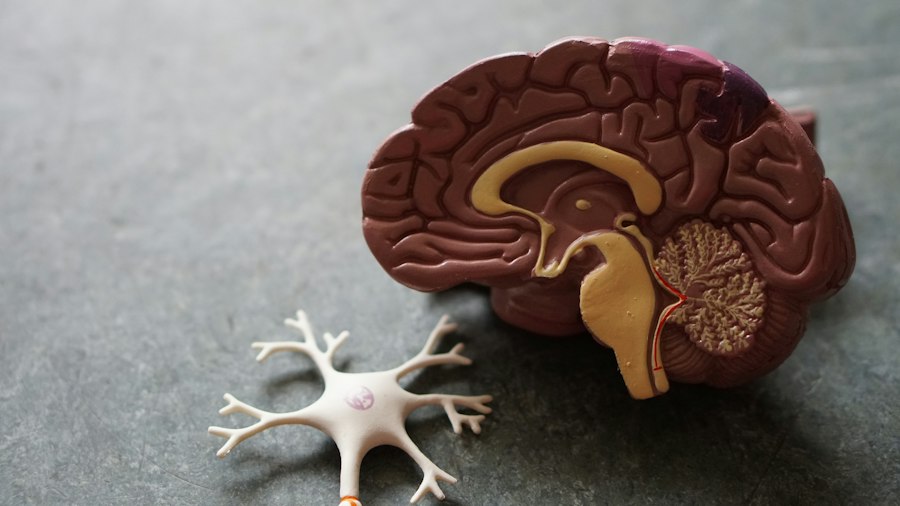
Wearable devices feed continuous health data into AI systems, enabling proactive and personalized care.
Real-World Deployment
Many AI projects fail when they go from a research lab to a hospital floor, but Duke University Health System provides an impressive proof of concept. Three AI models trained on thousands of surgical procedures predicted operating room time required for each treatment with 13% more accuracy than human schedulers working alone, according to study published in 2023. These models are currently in use in every operating room at Duke, lowering the cost of extra labor and enabling more effective utilization of surgical suites.
Importantly, the AI increased the scheduling team's effectiveness rather than replacing them. Human schedulers continue to be "the conductors of the orchestra," reviewing board changes in real time and rerouting resources as situations develop, according to one Duke operations executive. The lesson here is generally applicable: AI deployments in healthcare that are co-designed with the administrators and physicians who will actually use them and verified against real-world workflows prior to widespread implementation are the most effective.
The importance of AI in image surveillance is further demonstrated by Duke's experience. In order to identify early illness signs, researchers there are investigating the development of a reference standard for what constitutes "healthy" in imaging data. This supports the larger trend of AI serving as a watchful second reader in radiography, identifying minute irregularities that human eyes would miss in a hurry.
"It's very important that AI technology serve the humans. It's very powerful, but it's just math."
— Michael Pencina, PhD, Chief Data Scientist, Duke Health · Duke University School of Medicine (2023)Duke Health: By the Numbers
Robotics & Care Delivery
AI is becoming the intelligence underlying physical devices, such as automated equipment and robots that work in hospital settings alongside human care teams, going beyond software and algorithms.
AI-driven robotics are finding their most mature applications in rehabilitation therapy and minimally invasive surgery.
"AI-driven robotics automate tasks and enhance care delivery, particularly in rehabilitation and surgery. However, challenges such as data quality, interpretability, bias, and regulatory frameworks must be addressed for responsible AI implementation."
— Rasool et al., Journal of Medicine, Surgery & Public Health (2024)Using peer-reviewed research from 2010 to the present, a 2024 comprehensive review that was published in the Journal of Medicine, Surgery & Public Health investigated the integration of AI into healthcare delivery. According to its results, technology is both revolutionary and still in its infancy. On the transformative side, AI algorithms show excellent accuracy in diagnosing diseases from medical images, make it possible to create customized treatment plans based on patient data, identify high-risk patients for preventative interventions, simplify administrative processes, and increasingly power robotic systems in both surgical and rehabilitative settings.
AI-assisted robotic surgery provides surgeons with improved accuracy, less tremor, and real-time input from imaging systems built right into the surgical platform. Robotic treatment systems and AI-powered exoskeletons in rehabilitation may respond in real time to a patient's development, giving exercises at the proper intensity and modifying regimens as recovery progresses. By enabling more frequent, data-driven therapy sessions than would be possible with human personnel alone, these tools increase the capacity of physical and occupational therapists.
However, the same review is open about the obstacles. Strong legal and ethical foundations are essential, not optional extras. Models for human-AI collaboration must be carefully created, with safety validation integrated from the beginning rather than added after deployment. Comprehensive regulation that keeps up with the technology's rapid progress is crucial, as is educating patients and physicians about the potential and constraints of AI. The authors stress that the deployment of AI should adhere to a paradigm of "recommendations" rather than instructions, meaningfully including competent people in critical healthcare choices.
When considered collectively, the data from this study supports a major trend in the literature: AI's promise in healthcare is undeniable. The governance frameworks, data standards, and human-centered implementation techniques that will decide whether or not that promise is fulfilled in a safe, equitable, and large-scale manner still need to be developed.

Conclusion
One conclusion emerges from analyzing the data: the debate is not about whether AI should be used in healthcare, but rather how to create the circumstances necessary for it to operate in a safe and equitable manner.
What Now? Recommended Next Steps
Every reliable AI technology relies on an interoperable, standardized health data infrastructure, which governments and health institutions must invest in.
Instead of repurposing existing device regulation, regulatory agencies must create adaptive approval frameworks expressly for constantly learning software.
In order to teach doctors in AI literacy, medical education must change such that they are aware of both the strengths and weaknesses of these technologies.
To stop technologies from exacerbating health disparities, AI developers must prioritize diverse, representative training data from the beginning rather than as an afterthought.
This composition's five sources, which cover the years 2019 through 2024, all present a continuous tale with a steady tension. The technological potential of AI to enhance healthcare is already proven, peer-reviewed, and, in certain situations, has actually been implemented. On some imaging tasks, algorithms do better than radiologists. Duke's surgical scheduling AI reduces overtime expenses. Real-time patient adaptation is a feature of robotic rehabilitation systems. The technology is functional.
However, being prepared and working are two different things. The research makes it equally evident that the data standards, governance frameworks, accountability mechanisms, and equitable protections that surround AI have not kept up with the instruments themselves. This is the main difficulty that the research uncovers: a potent remedy that the system is not yet prepared to deploy responsibly on a large scale.
Based on this information, I tentatively contend that AI in healthcare can only reach its full potential if institutional, ethical, educational, and regulatory human systems are established alongside the technology rather than after it. Every deployment that has delayed or failed follows the same pattern: the governance was viewed as someone else's concern, and the AI was built first. Duke's accomplishment provides the counter model, in which medical professionals and engineers collaborate to develop instruments that closely mimic actual processes while emphasizing human judgment.
In the future, "can AI diagnose cancer?" won't be the most crucial question since we already know it can. Who gets to gain from it, whose data trained it, and who is accountable when it makes mistakes? The gap between AI's promise and its equitable, safe delivery will continue to be the defining problem of the future age of medicine until those questions have tangible solutions.
Peer-Reviewed Literature